Thin or uneven vegetation can have more than one contributing cause. A repair decision becomes stronger when the pattern, timeline and site evidence are documented before the surface is changed. Ask the responsible contractor or adviser to review possible explanations, then define the action that addresses the identified problem. Repeating seed placement may be appropriate in some cases, but it should not be an automatic answer to every thin patch or delayed emergence.
Preserve the evidence before intervening
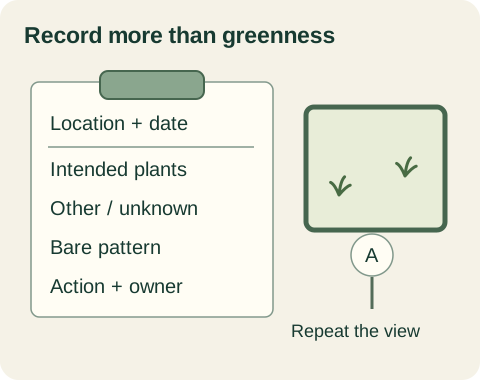
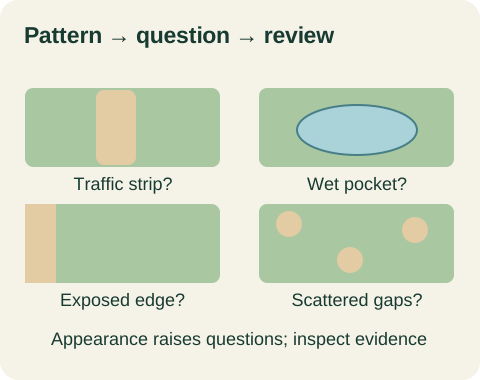
Photograph the full area and representative close locations using dates and map identifiers. Record the seed specification, application date and known care actions. Describe the pattern plainly: a connected strip, scattered gaps, an edge or a low pocket. Avoid starting with a conclusion such as bad seed unless evidence actually supports it.
If urgent protection or safety action is necessary, involve the responsible person and document the condition as practicable. Otherwise, changing the surface immediately can remove useful clues. A review should have enough information to compare strong and weak areas. The purpose is to support a fair diagnosis, not to assign fault from a photograph before the relevant facts are known.
Examine the timeline and expected development
Ask how the observed stage compares with the actual seed components and conditions. Calgary's seeding page notes that common turf species differ in establishment behaviour. That limited comparison is a reason to examine the specified mix rather than assume every component should appear identically. It does not set a guaranteed day for a finished lawn.
Document weather, moisture observations, traffic and any change in care. A slow or uneven result may justify investigation without proving permanent failure. If the project uses a formal milestone, compare the evidence with its written definition and review authority. Do not replace that process with a neighbour's growth timeline or an internet photograph from a different climate and soil.
Compare weak areas with nearby strong areas
Map whether the pattern follows shade, slope, construction tracks, irrigation coverage or another observable feature. Record contrasting locations on the same visit. A difference can help focus the next assessment, but it is not automatic proof of a cause. Several conditions may overlap, and a visible association can require soil, system or vegetation expertise to interpret.
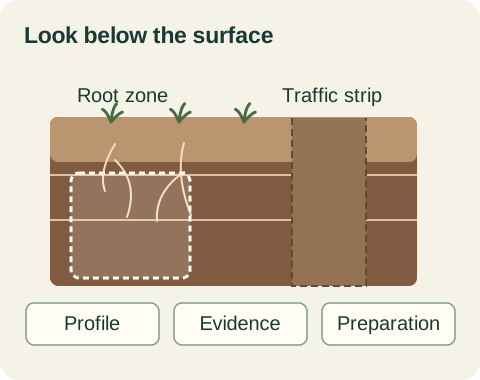
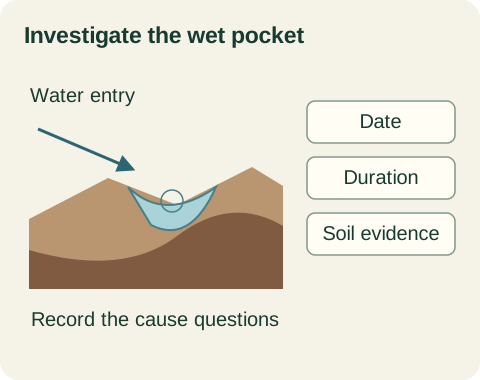
For example, a thin strip matching an old access lane raises a question about preparation and subsequent traffic. A low pocket raises a water and soil question. An exposed edge raises different site and distribution questions. Keep these as hypotheses with supporting observations and a proposed next check. This prevents a pattern description from turning prematurely into a prescribed remedy.
Review soil and water evidence together
Check the preparation record, known imported material and any soil analysis. Document wetness, runoff and apparent drying differences without assigning a universal watering dose. AAFC explains stable physical concerns associated with wet-soil compaction and waterlogging. Those principles can inform a review, but the actual cause at a property still needs appropriate assessment.
Avoid automatically increasing water across the whole site because one section looks thin. Compare low and high areas, check distribution and follow the lawful care method. If irrigation contributes to the problem, have the appropriate person review its output and operation. A fixed timer adjustment without examining the field pattern can obscure the condition rather than resolve it.
Reconcile seed and application records
Confirm the specified mix, supplied lot, relevant analysis and actual application quantity. CFIA guidance emphasizes identifiable seed lots and meaningful test records. These records can answer material questions, but a laboratory percentage does not prove field establishment. Likewise, a missing field result alone does not establish that the lot analysis was wrong.
Ask whether the work boundary, component rates or method changed during application. Keep documented substitutions and deviations in the review file. If records are incomplete, say what cannot be determined and request clarification. An evidence-based conversation should preserve uncertainty rather than fill a gap with whichever explanation seems convenient for the owner or contractor.
Consider competition and later disturbance
Distinguish intended vegetation from weeds or unidentified plants. Record whether mowing, pets, pedestrian routes, construction or other use altered the area after treatment. A green patch can still require review if its composition differs from the objective, while a bare traffic route may involve ongoing activity that a repeat application cannot solve without changed access.
Discuss what behaviour or protection needs to change before repair. The answer may be a route adjustment, vegetation redesign or another site action rather than a different seed product. Assign that responsibility and make it practical. A repair scope that leaves the same damaging operation in place should state the limitation openly instead of promising a different result from identical conditions.
Define the repair boundary and its reason
After review, identify the area, preparation, material and care changes the proposed repair includes. Distinguish a small localized intervention from reworking the full site. Ask who authorizes the decision and how retained successful vegetation will be protected. The written scope should explain what the repair addresses and what unresolved conditions remain outside it.
Record any effect on watering permissions, access, inspections and review milestones. A new application date may apply to the repaired boundary without redefining the entire property's status. Agree on later observations and any warranty implications using the actual contract. Do not infer that every repeat treatment is either automatically owed or automatically chargeable without examining the agreed responsibilities.
Work through a hypothetical fair review
Imagine a lawn with generally developing cover and one thin band along the former delivery route. The owner supplies fixed photographs, traffic history, the preparation scope and material records. The reviewer investigates the band and recommends an identified preparation correction before localized reseeding. The parties record the boundary, evidence, authorization and follow-up instead of debating a general claim that the lawn failed.
If the assessment remains inconclusive, the next action may be additional observation or specialist investigation rather than immediate treatment. Document why that step is chosen and when the evidence will be reviewed again. A good repair plan connects action to a reason, protects what is working and makes the remaining uncertainty visible without manufacturing a guaranteed outcome.
Sources + further reading
- City of Calgary: Seeding
- Agriculture and Agri-Food Canada: Managing wet soils
- Canadian Food Inspection Agency: Multiple seed-lot test results
Source review: 2026-10-04. Requirements and programs can change; confirm the current details with the authority or provider.