Weed management begins before application and continues after green cover appears. Seed, soil, equipment movement and existing plants all deserve attention in a revegetation plan. Use current references and qualified identification where needed, then have the appropriate person define a response. This guide provides a prevention and reporting workflow. It does not prescribe herbicides, authorize pesticide use or identify a regulated plant from an illustrative image.
Start with the current Alberta reference
Alberta states that prohibited noxious weeds must be destroyed and noxious weeds controlled. The province updated its regulated list on January 28, 2026. Use the current page and applicable legislation when reviewing a plant rather than a remembered list or old poster. Municipal responsibilities and project requirements may also need clarification with the appropriate authority.
Record the reference date in the project notes and identify who handles a regulatory question. A plant may remain undesirable for a particular landscape even if it is not provincially regulated. Keep the legal designation separate from the project's vegetation objective. This avoids treating every unwanted plant as a prohibited species or assuming an unregulated competitor can be ignored in a restoration plan.
Identify uncertain plants honestly
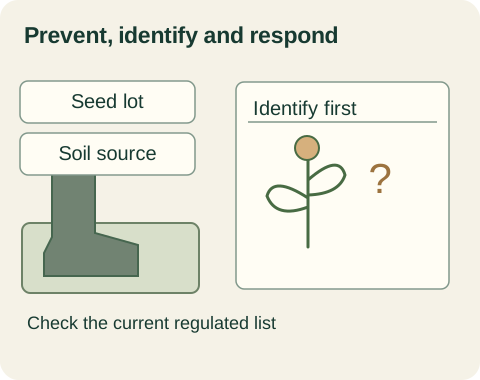
Photograph the plant in context and capture the features requested by a qualified identifier. Record its location, extent and observation date. Use unknown or tentative labels until identification is confirmed. A distant photo of green cover is rarely enough to distinguish the intended vegetation from all possible competitors, and an informal guess should not become a treatment instruction.
Ask the appropriate local professional, authority or identification resource for help when the decision matters. Preserve the answer and its basis. If the identification remains uncertain, record the next assessment step. A clear reporting process is especially useful when the person observing the site is a caregiver rather than someone trained to distinguish similar species.
Examine the existing site before procurement
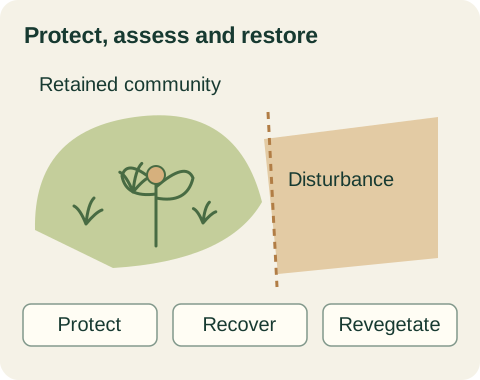
Map known unwanted vegetation inside and near the work boundary. Identify areas proposed for retention and ask how they will be protected. If existing weeds need management before seeding, have the responsible adviser specify the method, timing and relationship to later planting. A contractor applying seed should not be assumed to have accepted an undefined weed-removal scope.
For native sites, distinguish introduced competitors from desirable plants before disturbance. Clearing all vegetation can remove useful retained cover or create a new exposure problem. Connect the weed plan to the restoration objective and erosion strategy. The correct response may depend on the identity, extent, site constraints and approvals rather than a general preference for a visually clean surface.
Request relevant seed-lot evidence
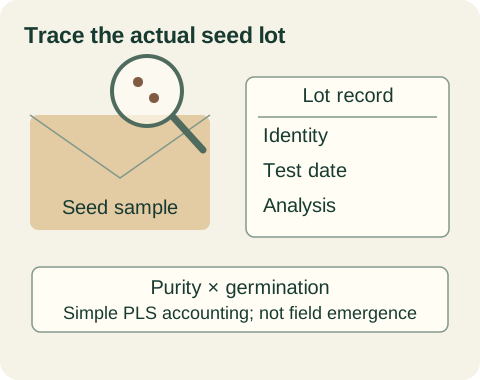
Keep seed identification and analysis connected to the delivered lot. CFIA states that an identified prohibited noxious weed seed in a tested lot prevents sale in Canada. That rule does not make every broad weed-free marketing statement equivalent to a complete project review. Request the records the specification needs and have uncertain analysis information interpreted appropriately.
The Alberta reclamation weed-awareness resource supports examining lot identity and unwanted-seed information, but its historical content should not be treated as the current provincial species list. Use each source for its actual purpose. The project may also exclude plants for ecological or land-use reasons beyond federal sale standards, so the approved vegetation specification remains necessary.
Include soil and equipment in prevention
Ask what source information and inspection apply to imported soil and other relevant materials. Record approvals and any concerns before material enters the site. Plan equipment and access practices appropriate to the project, especially when moving between areas with known unwanted plants and retained native vegetation. General cleanliness language should connect to a practical responsibility and sequence.
Identify where vehicles stage, where cleanup occurs and how waste or removed material is handled under the applicable requirements. Do not move suspect material to another part of the property merely to improve the treated area's appearance. The prevention plan should consider the broader site, including adjacent sources that may affect establishment after the application boundary is complete.
Define a lawful, site-specific response
Have the appropriate adviser determine what action is justified for the identified plant and setting. If chemical treatment is proposed, follow the actual legal, label and qualification requirements; this portal supplies no product selection or dose. Mechanical and other approaches also need consideration of disturbance, roots, soil exposure and the effect on intended young vegetation.
Document who approves and performs the work, how neighbouring areas are protected and what follow-up is required. A response should state its objective and the evidence needed to evaluate it. Avoid recording treated as though that alone proves the plant is controlled or destroyed. Later inspection may be needed to determine whether the intended result was achieved under the applicable standard.
Keep composition in the establishment record
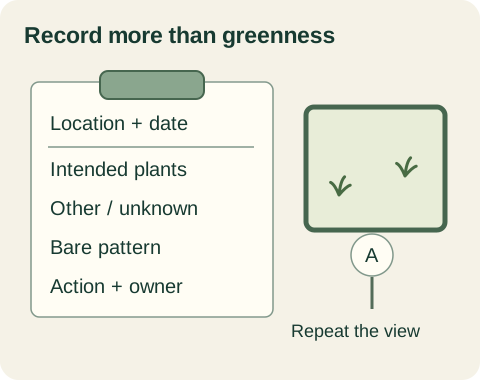
At each planned review, note intended plants, unwanted plants and unknowns separately. Map new occurrences and compare them with earlier observations. Overall green cover may rise while the intended vegetation remains sparse. The observation tool cannot identify species or decide whether a weed obligation has been met, so these findings need a separate manual review and response.
Link reported plants to actions and later checks. A useful record states when identification was obtained, which area was addressed and what the next visit found. Add relevant traffic, soil movement or other events as context without assuming they caused the occurrence. This timeline helps the adviser investigate patterns and keeps repeated concerns from disappearing between caregivers or contractors.
Work through a hypothetical prevention review
Imagine a disturbed acreage verge beside a retained native edge. Before application, the owner maps an unidentified plant patch and obtains identification. The project adviser sets a response and protects the retained area. The seed lot and imported-soil records are reviewed, while access and cleanup responsibilities are assigned. The request now describes prevention as part of the actual work.
Later visits separately record intended cover and a new plant occurrence near the access route. The observer reports the location and evidence rather than prescribing a treatment. Identification and follow-up are documented through the responsible process. This example shows how a weed plan can remain useful from procurement to establishment without inventing HAUSE operator credentials or assuming green appearance proves compliance.
Sources + further reading
- Government of Alberta: Provincially regulated weeds
- Government of Alberta: Weed awareness for reclamation
- Canadian Food Inspection Agency: Multiple seed-lot test results
Source review: 2026-10-04. Requirements and programs can change; confirm the current details with the authority or provider.